About C.A.R.E.
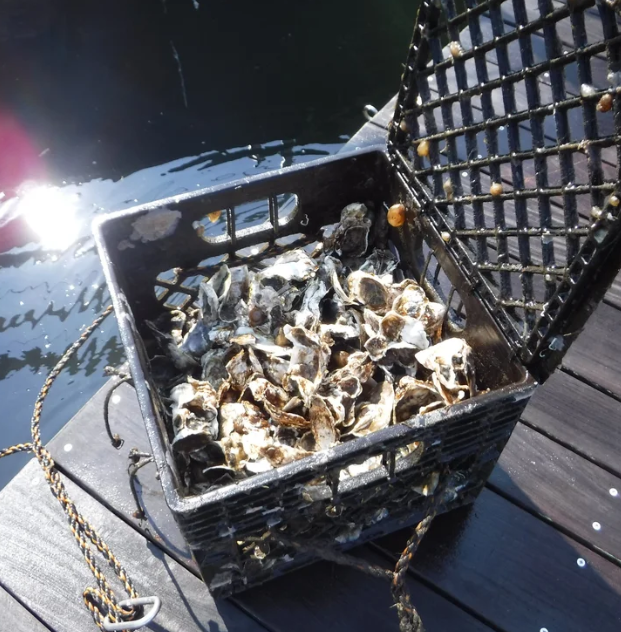
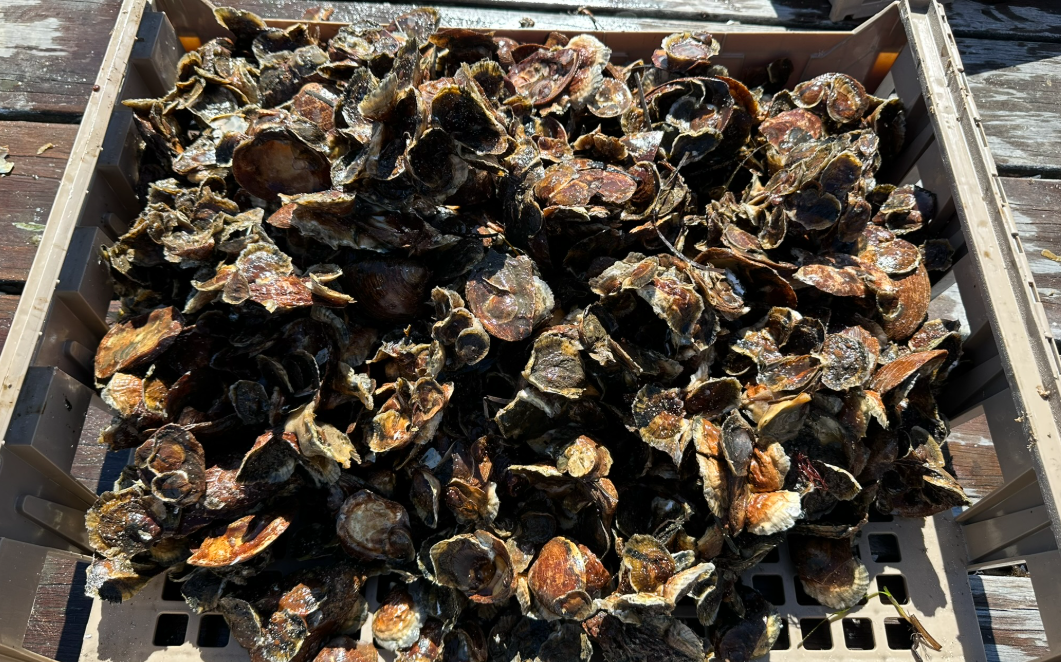
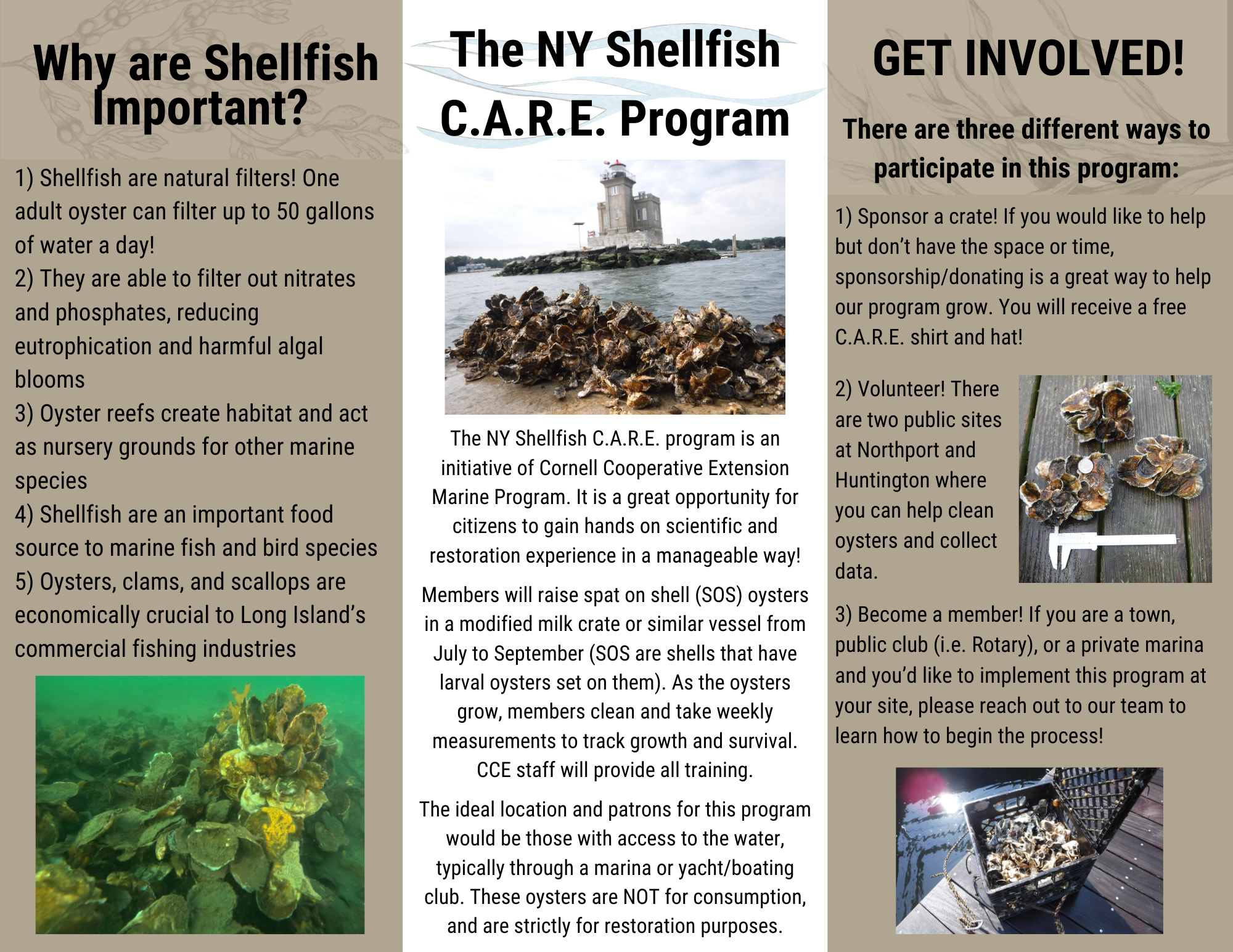
The Shellfish C.A.R.E. program is an initiative of Cornell Cooperative Extension Marine Program. It is an opportunity for citizens to gain hands on scientific and restoration experience in a manageable way. Members will raise spat on shell (SOS) oysters in a modified milk crate or similar vessel from July to September. SOS are oyster shells that have larval oysters set on them. As the oysters grow, members will clean and take weekly measurements of the oysters to track growth and survival. The ideal location and patrons for this program would be those with access to the water, either through a marina, yacht/boating club, or other arrangements that can be made. All C.A.R.E. oysters are NOT for human consumption, and are strictly for restoration purposes.
Once your application has been approved and payment is received, a milk crate will be filled with about one inch of shell seeded with oyster larvae. Although the volume of shell seems underwhelming at first, by the end of the season you can expect exponential growth from your oysters, to the point where they may outgrow the crate! In this instance, reach out to CCE staff for additional growing crates.
Through the hard work of our members, we are able to add oysters around 40mm/1.5 inches in length to one of our local reefs. This is significantly larger than the traditional planting size for restoration, and at this size, they are far less vulnerable to predation from organisms like fish, sea stars, whelks, and oyster drills. As SOS oysters grow, they will turn into 3D reef structures, providing solid structure to the reef. While filter feeding, each of these oysters will remove harmful algal species, nutrients, and heavy metals from the water. One adult oyster can filter up to 50 gallons of water a day! The final benefit of these oysters is the potential for reproduction at an exponential scale. Each female oyster has the ability to produce up to 100 million eggs. Not all of these will survive, but even if .001% of them do, that could be an addition of 1,000 oysters per female. These larvae can either make their way back onto our oyster reef or venture out and colonize their own reef.
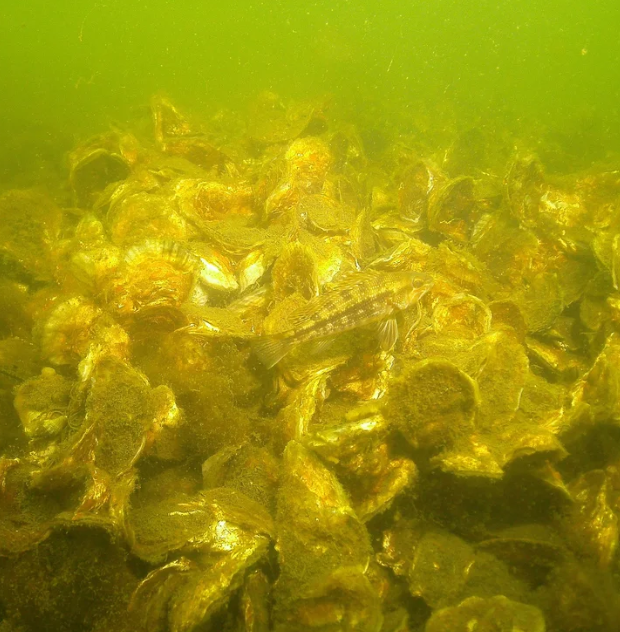
At the end of the season, all crates and oysters are collected by CCE staff for deployment onto restored oyster reefs. To the right is a picture of our reef at Gold Star, built in 2022. We also have reefs in Northport and Islip, both built in 2023. The crates will be overwintered by CCE staff and necessary repairs will be made. If you’re interested in seeing more, please click the “Gallery” link at the top of the website